
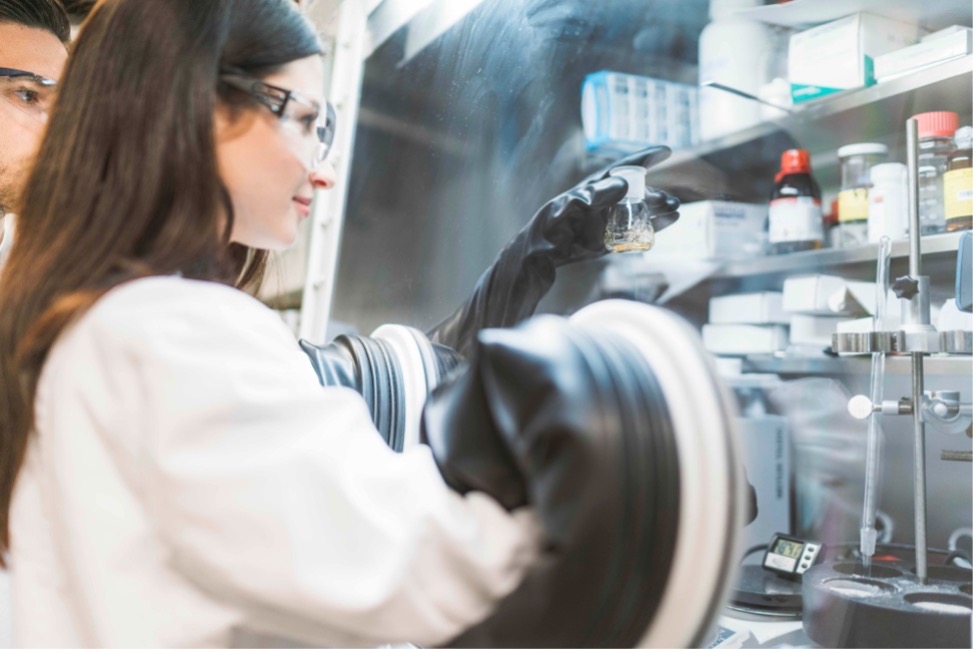
Effective containment is essential when handling potent pharmaceutical ingredients and hazardous powders. SMEPAC testing helps businesses assess whether equipment controls airborne emissions to acceptable levels and supports safer manufacturing operations.
Testing helps evaluate risks associated with:
FAT SMEPAC testing is performed at the equipment manufacturer’s facility before delivery to site. The purpose is to confirm the containment system performs in accordance with the design specification and to identify any required modifications prior to installation.
SAT testing is undertaken once the equipment has been installed and commissioned at the client’s facility. This assessment confirms containment performance under actual site conditions, including operator interaction and environmental influences.
Routine testing is carried out during normal operational use to verify ongoing containment performance and continued compliance with containment targets.
Testing frequency may depend on factors such as:
Review of process and containment requirements
Selection of suitable surrogate materials
Development of test protocols
Air and surface sampling during operation
Laboratory analysis of samples
Detailed reporting and recommendations
This is the maximum allowable concentration of airborne particulates (µg/m3) that can be detected outside the containment system during routine operations applied to only personal sampling results. Contrary to the CPT, which can be defined for any sampling location, the DEL only refers to operator exposure.
The type, location and method of sample collection play a key role when interpreting results.
Air Samples:
• Personal Breathing Zone (PBZ) air samples – Collected to assess individual exposure.
• Static Air Samplers – Air samplers placed in fixed locations from specific points on equipment.
Surface Samples:
• Surface samples – can be used to assess any existing contamination prior to and during the containment performance assessment (CPA) to identify emission points on equipment, and subsequent airborne deposition and mechanical transfer to equipment and facility surfaces.
Sampling typically follows the containment equipment test protocols laid out in appendix 4 of the ISPE guide.
There are a variety of surrogates available for use and their chemical and physical properties and characteristics should be chosen to closely match the intended use of the system taking into consideration things such as dustiness and particle size.
Typical surrogates include:

