
Workers across UK industry can be exposed to a huge range of hazardous substances during their normal working activities.
Around 500 substances have a UK Workplace Exposure Limit (WEL) listed in EH40. But EH40 is only part of the picture.
Many hazardous substances encountered at work do not have a UK WEL at all. Metalworking fluids are one example. Active Pharmaceutical Ingredients (APIs) are another, with paracetamol being the only API with a WEL listed in EH40.
So what are your people actually exposed to? How much are they exposed to? And how do you know your control measures are working?
A suitable COSHH assessment needs to reflect the work actually being undertaken, the substances involved, the potential routes and extent of exposure, and the measures required to adequately control it.
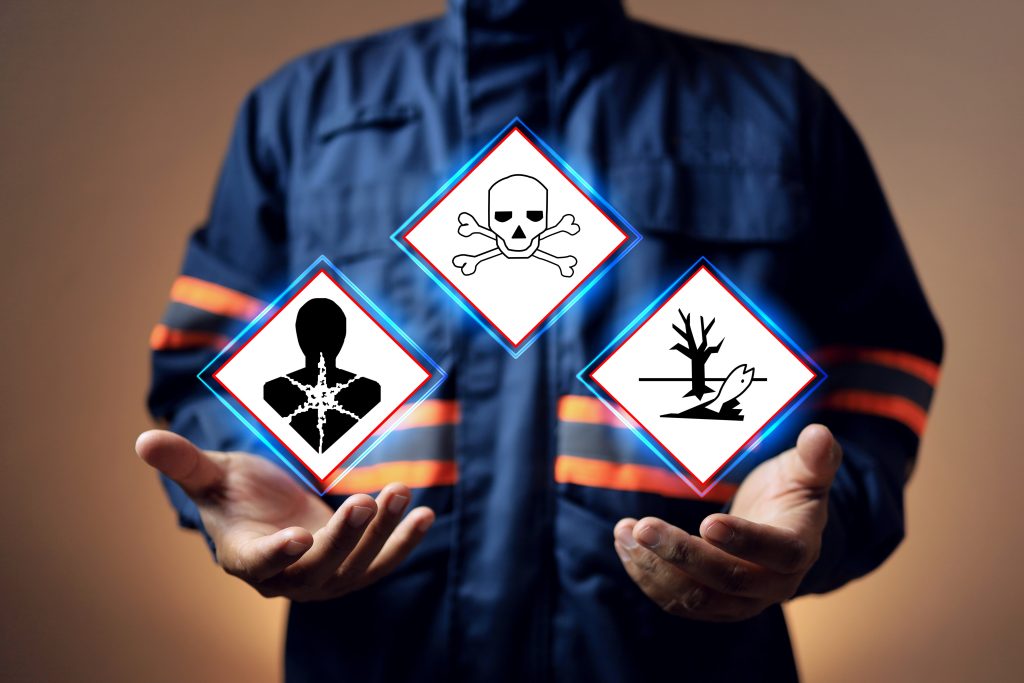
Here are ten hazardous substances and groups of substances commonly encountered across UK workplaces.
Welding fume is not a single substance.
Its composition varies according to the welding process, parent metal, consumables, coatings and contamination on the material being welded.
The particulate fume may contain metals and their compounds including iron, manganese, chromium, nickel, cobalt and zinc. Stainless steel welding, for example, can generate fume containing chromium and nickel compounds, while welding galvanised material can generate zinc-containing fume.
Welding processes can also generate gases including ozone, nitrogen oxides and carbon monoxide. Shielding gases such as argon, helium and carbon dioxide can present an additional asphyxiation hazard if they accumulate and displace oxygen, particularly in confined or poorly ventilated spaces.
HSE treats all welding fume as capable of causing lung cancer. Welding fume can also contribute to other respiratory disease, while particular constituents may present additional health risks.
Understanding exposure therefore means more than simply establishing that welding occurs. The welding process, material, consumables, coatings, duration and frequency of the work, working environment and effectiveness of the controls all matter.
For indoor welding, suitable Local Exhaust Ventilation (LEV) should normally be used to capture fume close to the source. Where LEV does not adequately control exposure, suitable respiratory protective equipment may also be required.
Respirable crystalline silica can be generated when silica-containing materials such as stone, concrete, bricks and tiles are cut, drilled, ground, polished or otherwise disturbed.
Exposure is commonly associated with construction, stone working, foundries, quarrying and manufacturing.
The very fine respirable particles can penetrate deep into the lungs. Repeated exposure can cause serious diseases including silicosis, chronic obstructive pulmonary disease (COPD) and lung cancer.
The current UK WEL for respirable crystalline silica is 0.1 mg/m³ as an 8-hour time-weighted average.
Processes capable of generating silica dust therefore require effective control at source. Depending on the process, this can include water suppression, enclosure and appropriately designed LEV.
Visible dust should never be used as the sole indication of exposure. The respirable particles of concern may not be readily visible.
Wood dust is generated during activities such as sawing, sanding, routing, machining and finishing wood and wood-based products.
Exposure is common in joinery, furniture manufacture, construction and woodworking workshops.
Both hardwood and softwood dust can cause occupational asthma. Hardwood dust is also associated with cancer, particularly of the nose.
The current 8-hour WEL is 3 mg/m³ for hardwood dust and 5 mg/m³ for softwood dust. Where hardwood and softwood dusts are mixed, the 3 mg/m³ hardwood limit applies to all the wood dust present.
Importantly, hardwood dust carries both carcinogen and sensitiser annotations in EH40. Control therefore involves more than simply staying below the WEL: exposure should also be reduced as low as reasonably practicable.
Effective LEV should capture dust at the woodworking machine before it disperses into the workplace.
Where the extent of exposure is uncertain, personal exposure monitoring can provide evidence of the concentration workers are actually exposed to during representative work.
Woodworking can also involve exposure to hazardous solvents and adhesives, including dichloromethane (see VOCs below).
Flour dust is a well-recognised cause of occupational asthma and is encountered in bakeries, food manufacturing, flour mills and commercial kitchens.
Exposure can occur during tipping, weighing, mixing, sieving, dusting and cleaning.
How the task is performed can make a major difference. Pouring ingredients from height, vigorous tipping, throwing flour or using compressed air for cleaning can generate substantial airborne dust.
Flour dust is identified as a respiratory sensitiser in EH40. It has an 8-hour WEL of 10 mg/m³ and a 15-minute short-term exposure limit of 30 mg/m³.
However, because flour dust is an asthmagen, exposure should be reduced as far below the WEL as reasonably practicable. HSE indicates that with good control practice an 8-hour exposure below 2 mg/m³ is usually achievable.
Control should therefore focus on preventing dust becoming airborne through good handling techniques, suitable processes and engineering controls rather than treating the WEL as an acceptable operating target.
Isocyanates are used in polyurethane paints, coatings, foams, adhesives and numerous other products.
They are encountered across industries including vehicle repair, manufacturing, construction and polyurethane production.
Isocyanates are potent respiratory sensitisers and an important cause of occupational asthma. Once someone has become sensitised, subsequent exposure to relatively small quantities may trigger symptoms.
Activities that generate aerosols, particularly spraying, can present significant exposure potential and require robust controls.
Assessment needs to consider the particular isocyanate, the process in which it is used, potential inhalation and skin exposure, and whether controls remain effective during the actual work.
Biological monitoring may also be used for workers exposed to isocyanates and can provide additional evidence about the effectiveness of exposure controls.
Metalworking fluids are widely used during machining operations to cool and lubricate tools and components.
Operators of CNC machines, lathes and other machining equipment can potentially be exposed to metalworking fluid mist or aerosol, particularly where machines are inadequately enclosed, extraction is ineffective or working practices allow mist to escape.
Exposure can affect both the skin and respiratory system and is associated with conditions including dermatitis, occupational asthma and hypersensitivity pneumonitis.
Water-mix metalworking fluids can also become contaminated with microorganisms during use, making effective fluid management an important part of the overall control strategy.
There is no UK Workplace Exposure Limit in EH40 for metalworking fluid mist.
That does not mean exposure is acceptable or that it does not need to be controlled.
COSHH requires exposure to metalworking fluids by inhalation, ingestion or skin contact to be prevented where reasonably practicable or, where prevention cannot be achieved, adequately controlled.
Controls can include machine enclosure, effective mist extraction, good fluid management and appropriate working practices.
Operators should also allow sufficient time for mist to be removed before opening machine doors following machining. Activities such as using compressed air to clean components can generate additional airborne mist and should be carefully controlled.
Metalworking fluids are a useful example of why the absence of a WEL does not mean the absence of an occupational exposure risk.
Volatile Organic Compound, or VOC, describes a broad group of chemicals rather than one specific workplace hazard.
VOCs are encountered in paints, coatings, solvents, adhesives, printing, cleaning products and numerous manufacturing processes.
Their health effects differ considerably depending on the actual substances involved. Some may primarily cause irritation or effects on the central nervous system, while others can present more serious long-term health risks.
Dichloromethane (methylene chloride) is one example of why the specific substance matters. It may be encountered in some adhesives, coatings and paint or varnish stripping products, including those used in woodworking and furniture manufacture. It is highly volatile and can be readily inhaled, particularly where products are used in poorly ventilated areas.
Dichloromethane has its own UK Workplace Exposure Limit and can cause effects on the central nervous system as well as more serious health effects following repeated exposure. Appropriate controls may include substitution with a less hazardous product, containment, effective ventilation or LEV, and suitable working practices.
For that reason, identifying an exposure simply as “VOCs” is rarely sufficient for a meaningful COSHH assessment.
Employers need to understand which chemicals are actually present, how they are being used, how workers could be exposed and whether appropriate controls are operating effectively.
Where exposure measurement is required, sampling should normally be designed around the particular substances and questions being investigated rather than treating all solvent vapours as a single generic contaminant.
Lead can be encountered in manufacturing, engineering, battery manufacture and recycling, but exposure can also occur during the maintenance, refurbishment or demolition of older buildings, structures and equipment.
Lead-containing paint is a particularly important example.
Disturbing old painted surfaces by sanding, grinding, burning, blasting or other removal methods can generate lead-containing dust or fume. Significant exposure can therefore occur even though lead is not being deliberately introduced into the current process.
Exposure can occur through inhalation of lead-containing dust or fume and through ingestion following contamination of hands, clothing, work surfaces, food or drink.
Lead can affect multiple systems within the body, including the nervous system, kidneys and blood, and can also affect reproductive health.
Work involving significant exposure to lead is subject to the Control of Lead at Work Regulations 2002, rather than being managed solely under COSHH.
The regulatory approach includes specific requirements relating to assessment, control, air monitoring and medical surveillance, including biological monitoring where appropriate.
As with other hazardous substances, controlling the source of exposure remains fundamental and may involve enclosure, LEV, strict hygiene arrangements and appropriate respiratory protection.
Formaldehyde is used in numerous industries, but Armstrong Environmental frequently encounters it within hospitals, pathology departments, laboratories, mortuaries and embalming facilities.
Formalin solutions are widely used for preserving and fixing biological tissue. Exposure may occur during specimen handling, tissue preparation, decanting and pouring formalin, disposal activities and embalming.
Formaldehyde can cause significant eye and respiratory irritation, can cause sensitisation and presents a carcinogenic hazard.
Its current UK WEL is 2 ppm (2.5 mg/m³) for both the long-term and short-term reference periods.
The particular task can be critical when assessing exposure. A short activity such as pouring, transferring or opening formalin containers can create an exposure pattern very different from the average exposure occurring during the rest of a working shift.
Controls may include closed or semi-closed systems, ventilated workstations, downdraft or backdraft benches and other forms of LEV.
Exposure monitoring can be particularly valuable where there is uncertainty over exposure during representative handling activities or over the effectiveness of existing engineering controls.
Pharmaceutical manufacturing presents a different occupational hygiene challenge.
Active Pharmaceutical Ingredients are specifically designed to produce biological effects, and some may be potent at extremely low concentrations.
Paracetamol is the only Active Pharmaceutical Ingredient with a UK Workplace Exposure Limit listed in EH40.
Other APIs may have substance-specific Occupational Exposure Limits (OELs). These are often developed in-house by pharmaceutical companies or derived by occupational toxicologists using available toxicological, pharmacological and clinical data.
Where a numerical OEL has not been established, an Occupational Exposure Band (OEB) or similar control-banding approach may be used to determine the level of containment and control required.
For potent APIs, occupational exposure limits can be extremely low and may require very high levels of containment.
Engineering controls can include isolators, containment booths, closed-transfer systems and other high-containment equipment.
Workplace exposure monitoring can assess worker exposure against the relevant OEL, while containment performance testing such as SMEPAC can provide evidence of the containment achieved by engineering controls under defined operating conditions.
These are related but different questions. SMEPAC characterises containment performance; personal exposure monitoring assesses what the worker is actually exposed to.
APIs provide another important example of a fundamental occupational hygiene principle:
The absence of a substance from EH40 does not mean that the substance is safe or that exposure does not need to be assessed and controlled.
Diesel engine exhaust emissions are a complex mixture of gases, vapours and fine particulate matter produced during the combustion of diesel fuel.
Exposure can occur in workplaces where diesel-powered vehicles, plant or equipment operate, particularly in workshops, warehouses, loading areas, construction environments, tunnels and other enclosed or poorly ventilated spaces.
Diesel exhaust contains a mixture of substances including elemental carbon, carbon monoxide, nitrogen oxides and numerous organic compounds. The precise composition varies depending on the engine, fuel, operating conditions and effectiveness of emission-control technology.
Long-term occupational exposure to diesel engine exhaust emissions is associated with an increased risk of lung cancer, and exposure can also cause irritation of the eyes and respiratory tract.
There is no single UK Workplace Exposure Limit for diesel engine exhaust emissions as a mixture. Individual constituents may have their own WELs, but assessing those substances alone does not necessarily represent the overall health risk from diesel exhaust.
Control should therefore focus on preventing or minimising emissions at source. Measures can include eliminating unnecessary engine running, using cleaner or alternative-powered equipment, maintaining engines and emission-control systems, improving general ventilation and using Local Exhaust Ventilation (LEV) or tailpipe extraction where appropriate.
Where occupational exposure remains uncertain, workplace exposure assessment can help establish the extent of exposure and whether existing controls are effective.
EH40 contains Workplace Exposure Limits for hundreds of substances encountered in UK workplaces.
Most long-term WELs are expressed as an 8-hour time-weighted average, while short-term exposure limits normally use a 15-minute reference period.
WELs provide an important benchmark when assessing occupational exposure, but staying below a WEL is not, by itself, the complete test of adequate control.
Under COSHH, adequate control requires the principles of good control practice to be applied, any applicable Workplace Exposure Limit not to be exceeded, and exposure to carcinogens, mutagens and asthmagens to be reduced to As Low As is Reasonably Practicable (ALARP).
It is also important to understand that the carcinogen and sensitiser annotations shown in EH40 are not intended to be an exhaustive list of every substance capable of causing cancer or occupational asthma.
And importantly:
The absence of a substance from EH40 does not mean that it is safe.
Where there is no UK WEL, a COSHH assessment still needs to establish the nature of the hazard, the potential for exposure and an appropriate basis for deciding whether exposure is adequately controlled.
This is where workplace exposure assessment becomes important.
HSE guidance G409 describes exposure measurement as a means of assessing airborne exposure and sets out what employers should expect when occupational hygiene measurements are undertaken.
The starting point should be a clear question.
Are you trying to establish:
The sampling strategy should then be designed to answer that question.
For personal exposure assessment, this will generally involve measuring contaminants within the worker’s breathing zone while they undertake representative work.
That last point matters.
A sample collected during an unrepresentative production period, with machinery operating differently from normal or while a worker performs an atypical task, may produce a perfectly valid laboratory result but provide a poor answer to the real occupational hygiene question.
Exposure assessment therefore involves considerably more than attaching sampling equipment to somebody and sending the samples to a laboratory.
A competent occupational hygienist should understand the substances, processes, tasks, existing controls, working patterns and likely routes of exposure before determining an appropriate sampling strategy.
The results then need to be interpreted in that context.
Air monitoring can provide valuable evidence.
It can help establish the extent of exposure, demonstrate compliance with a WEL or other exposure limit, identify tasks generating significant exposure and assess whether control measures are providing the expected level of protection.
But monitoring does not itself control exposure.
The primary objective remains to prevent exposure where reasonably practicable or otherwise achieve adequate control through measures such as substitution, process design, enclosure, LEV and appropriate working practices.
Measurement should support those decisions.
A result below a Workplace Exposure Limit should therefore not automatically result in the conclusion:
“Pass – nothing else required.”
For carcinogens and asthmagens in particular, the question also needs to be whether further exposure reduction is reasonably practicable.
The more useful question is:
What does the evidence tell us about the exposure, the process and the effectiveness of the controls?
Whether the hazard is welding fume, silica, flour dust, formaldehyde, metalworking fluid or a potent pharmaceutical compound, the fundamental questions remain remarkably similar:
What is the hazard?
How could people be exposed?
How much exposure is occurring?
What controls are in place?
And what evidence demonstrates that those controls are working?
A Workplace Exposure Limit may form part of that assessment, but it is not the whole answer.
A good COSHH assessment should ultimately connect the hazard, the work being undertaken, the potential exposure, the control measures and the evidence that those controls are effective.
If you’re unsure what your people are exposed to, how much exposure is occurring, or whether your existing controls are working as intended, Armstrong Environmental can help you establish the evidence.