
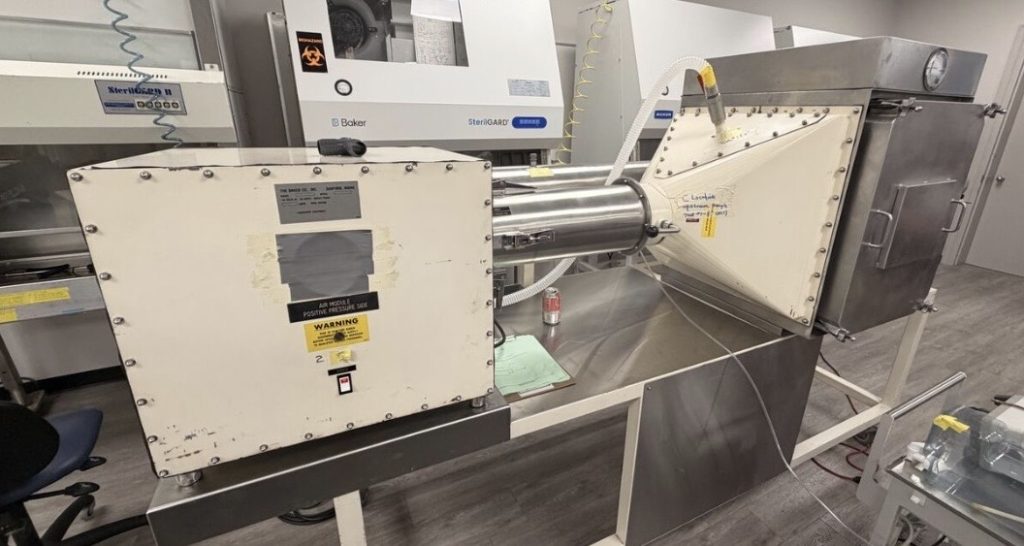
High Efficiency Particulate Air (HEPA) filters are widely used in pharmaceutical manufacturing, healthcare, specialist laboratories and industrial ventilation systems, including Local Exhaust Ventilation (LEV).
These filters are designed to remove airborne particles from an airstream. However, the efficiency classification of a HEPA filter does not necessarily demonstrate the integrity of the complete installed filtration system.
Even where a filter meets its specified efficiency classification, leakage may occur through:
Installed filter integrity testing helps establish whether the filtration system has leakage paths that could compromise its intended performance.
Testing installed HEPA filtration systems can be considerably more challenging than testing individual filters under controlled manufacturing conditions.
Depending on the installation and test method, important considerations include:
These challenges are particularly relevant to existing LEV systems where HEPA filters may have been incorporated into ductwork or filtration units without sufficient consideration of future integrity testing requirements.
Within LEV systems, HEPA filtration may be used where a high level of particulate removal is required before air is discharged or recirculated.
However, effective control of airborne contaminants requires consideration of the complete engineering control system.
This includes contaminant capture, transport, filtration and discharge, together with the operating conditions and maintenance arrangements.
HEPA filter integrity testing is therefore one element of assessing system performance, rather than a substitute for a comprehensive LEV examination or assessment of exposure control.
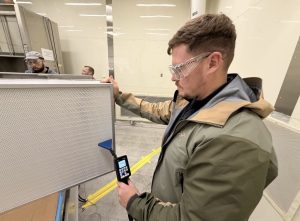
Our visit to the Eagleson Institute reflects Armstrong Environmental’s commitment to maintaining and developing specialist technical expertise.
By combining practical engineering knowledge, occupational hygiene principles and specialist testing techniques, we continue to strengthen our understanding of complex ventilation and filtration systems.
This ongoing investment supports our objective of providing independent, technically robust assessments that help clients understand the performance of their engineering controls.
Armstrong Environmental – Forging trusted relationships to facilitate COSHH compliance.