
Home > Regional Coverage > Midlands
Armstrong Environmental provides independent Local Exhaust Ventilation testing for organisations throughout the Midlands.
The region combines major automotive and advanced-manufacturing activity with aerospace, rail, polymers, food production, energy operations, universities, healthcare and specialist research.
We support individual extraction systems as well as automated production lines, complex manufacturing sites and substantial LEV estates where reliable testing and consistent technical reporting are essential.
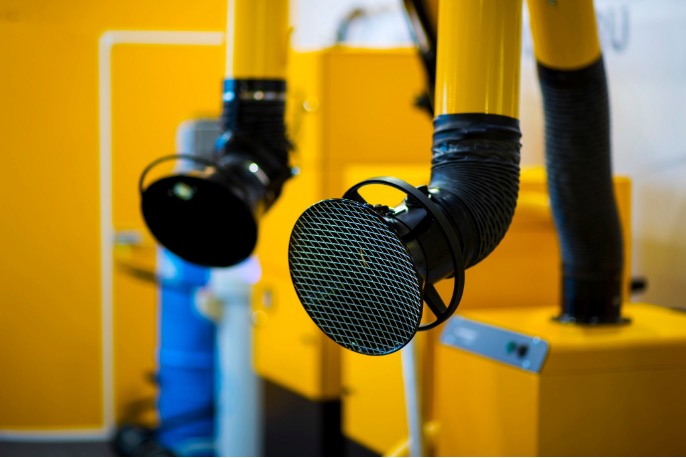
LEV should capture hazardous dust, fume, mist or vapour at or close to its source, before it disperses into the workplace and enters an employee’s breathing zone.
Control can change when production rates, tools, materials, enclosures, robot cells or operator methods change. Damage, blockage and wear can also reduce performance. A thorough examination and test, commonly called an LEV TExT, therefore needs to consider the system in use rather than measurements in isolation.
Regulation 9 of the Control of Substances Hazardous to Health Regulations requires employers to maintain control measures in an efficient state, in efficient working order, in good repair and in a clean condition.
The COSHH Approved Code of Practice and guidance, known as COSHH L5, supports these duties. HSE guidance HSG258 sets out good practice for commissioning, examining, testing and managing Local Exhaust Ventilation.
Most LEV systems require thorough examination and testing at least once every 14 months. Some specified processes require shorter intervals, while risk, operating conditions or previous findings may justify more frequent checks.
A competent examination considers the contaminant-generating process, the operator’s interaction with the control and the complete system, including the hood or enclosure, ductwork, air cleaner, fan and discharge.
Testing may include visual examination, smoke visualisation, airflow and pressure measurements, assessment of capture and comparison with commissioning data or another suitable performance benchmark.
The report should reach a clear conclusion on control performance, explain defects and their significance, and give the duty holder prioritised actions that can be used by engineering, production and health and safety teams.
The Midlands is a centre for vehicle production, component manufacture, automated engineering and precision manufacturing, supported by significant aerospace, rail, polymer, food and research activity.
Processes can generate welding fume, metalworking mist, coolant aerosol, composite and plastic dust, flour and ingredients dust, solvent vapour and other hazardous substances requiring effective control under COSHH.
Armstrong Environmental has experience supporting organisations across:
We assess each engineering control in the context of the actual process, material and operator task, while coordinating work around production schedules, automated cells, hygiene requirements, access restrictions and site procedures.
Large manufacturing and research organisations may operate hundreds of extraction points across production lines, workshops, laboratories, buildings or multiple sites.
Armstrong Environmental can coordinate planned testing programmes while maintaining a consistent technical approach to every individual examination.
Our support can include asset verification, testing schedules, consistent reporting, prioritisation of significant defects and identification of recurring issues associated with particular processes or system types.
gives duty holders clearer oversight of their systems, reports, examination dates and outstanding actions, helping engineering and health-and-safety teams manage COSHH controls between test visits.
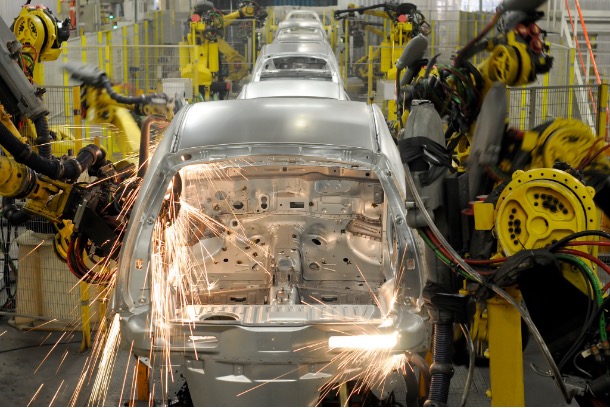
Automated production can separate employees from a contaminant source during normal operation, but exposure may still arise during intervention, fault recovery, tool changes, maintenance, cleaning or quality checks.
LEV performance should therefore be considered alongside the tasks people actually undertake and the occasions when guards, enclosures or automated sequences are interrupted.
Where engineering measurements alone do not provide sufficient evidence of adequate control, Armstrong Environmental can design workplace exposure assessments using personal exposure monitoring, static air sampling and task observation.
Results can be considered against relevant Workplace Exposure Limits in EH40 or suitable substance-specific criteria. Meeting a limit does not replace the wider COSHH duty to prevent exposure or ensure that it is adequately controlled.
Our wider capability also includes testing of fume cupboards and validation of biological safety cabinets against BS EN 12469 for universities, healthcare, pharmaceutical and research environments.
Clients choose Armstrong Environmental because we provide:
Our LEV testing is led by BOHS-registered LEV Specialists listed on the BOHS Register of Occupational Hygiene Professionals, which is accredited by the Professional Standards Authority.